

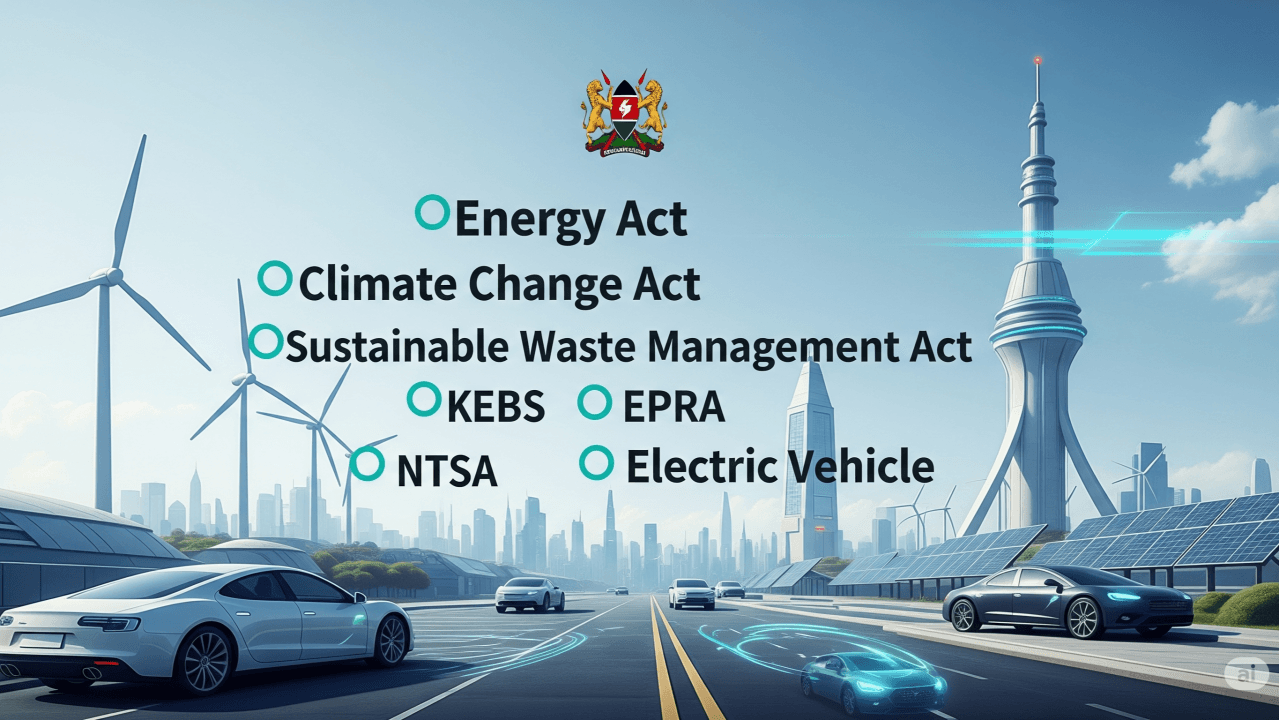
Regulatory and Legal Framework for Electric Vehicles in Kenya

Energy Act 2019
The Energy Act 2019 is the primary law governing the energy sector in Kenya. It consolidates laws on renewable energy, electricity, and energy efficiency and creates a framework for EV-related policies and infrastructure. This law empowers the Energy and Petroleum Regulatory Authority (EPRA) to regulate the energy sector, including electricity supply for EV charging, electric subsectors, and emerging technologies like EV infrastructure. EPRA can license EV charging stations and set technical and safety standards. Since the charging infrastructure is regarded as an electricity distribution activity, it must be licensed under the Act.
Section 204 of the Act allows for regulations on energy efficiency and conservation, which includes EVs. The law promotes the adoption of clean energy in transport by integrating the electric grid with smart technologies. In addition, this legislation aligns with other laws such as the Climate Change Act 2016, in terms of low carbon emission and development; Kenya's international obligations under the Paris Agreement; and the National Energy Policy 2018, which champions clean transport.
Climate Change Act 2016
This legislation provides a framework for low-carbon development and clean transport solutions. It guides ministries and government agencies to adopt development strategies that reduce greenhouse gas emissions in sectors like transport. As such, the climate and low-emission mandates under the Act favour the adoption of EVs, especially in urban centres.
The law supports the promotion of clean transportation and EVs as part of Kenya’s climate change mitigation strategies. This has led to a policy shift whereby the transport system in Kenya has begun adopting EVs and hybrids. Thus, EVs are championed as alternative mobility options, with many taxis, Ubers, Bolts, buses, and personal vehicle owners opting for them.
The Act aligns various regulatory frameworks, such as the Energy Act 2019, the National Energy Policy 2018, and the draft EV policy, with other laws, including County Climate and Environmental Regulations.
Practical outcomes under the law include climate finance support for green transport, including EVs, and donor or public sector programs that promote EVs, such as charging stations in rural and low-income areas.
While the law does not expressly regulate EVs, it creates an enabling framework for EV adoption. By mandating climate-friendly transport solutions and development, it catalyses investment in clean energy and transport infrastructure.
Section 13 of the Act enables the development of Five-Year Climate Change Action Plans (NCCAPs), which focus on low-carbon energy and transport, of which EVs are a major part. These action plans aim to maximise EV adoption, support clean and efficient public transport, for example, electric buses, and promote EV charging infrastructure.
National Energy Policy 2018
This policy encourages the diversification of transport energy sources. Its goal is to reduce overreliance on petroleum products, such as petrol and diesel used in internal combustion engine vehicles. EVs are promoted as clean, sustainable, and efficient transport modes.
The policy promotes clean, efficient, and sustainable mobility, focusing on electricity and other alternatives to fossil fuels. Modernisation of public transport through the use of electric buses and rail is a top priority.
It advocates for EVs and associated charging infrastructure throughout the country and encourages the development of grid-ready policies and regulations to support EV charging.
Given the low manufacturing capacity in the country, the policy supports incentives for local manufacturing and importation of EVs. Tax incentives for cleaner modes of transport encourage a shift to EVs and investment in charging infrastructure.
The policy also calls for multi-stakeholder involvement, including NTSA, KPLC, and EPRA, in regulating the EV sector. It laid the foundation for the Energy Act 2019 and regulatory developments such as EPRA's electric mobility regulations.
Sustainable Waste Management Act 2022
A significant regulatory challenge in EV adoption involves waste management, particularly the disposal of EV batteries containing hazardous elements like lithium. The Act regulates the disposal of batteries and electronic waste, which is critical to EV battery life cycles. It mandates that importers, dealers, and manufacturers take back end-of-life batteries and ensure their safe disposal and recycling.
An Extended Producer Responsibility (EPR) framework is imposed under the Act. EV importers, assemblers, and manufacturers must comply with mechanisms that ensure safe waste handling.
The Act encourages a circular economy. Components should be repaired, reused, and recycled. Batteries should be reused where possible. The law implies that EV players must establish logistics systems to take back and dispose of batteries responsibly. It also promotes partnerships between EV importers and electronic waste recyclers.
Traffic Act Cap 403
This law governs vehicle registration, licensing, road safety, standards, insurance, and driver conduct. However, it was originally designed for internal combustion engine vehicles and does not comprehensively address EV-specific requirements. The Act does not properly categorise EV types such as Battery Electric Vehicles (BEVs), Plug-in Hybrid Electric Vehicles (PHEVs), Hybrid Electric Vehicles (HEVs), Fuel Cell Electric Vehicles (FCEVs), and Light Electric Vehicles (LEVs).
It is under review to incorporate EV classifications, licensing, and insurance standards. Reforms are needed for roadworthiness assessments, emissions standards, and EV-specific safety features, including fire protection and battery health.
Without a specific regulatory framework, EV inspection and licensing remain inconsistent. NTSA must align inspection procedures with EV safety and environmental standards. A clear licensing framework will boost investor and consumer confidence in the EV sector.
Energy and Petroleum Regulatory Authority
EPRA is the primary regulator for EV charging infrastructure. It licenses electric vehicle charging service providers and sets technical and safety standards. Licenses may be revoked for non-compliance with standards issued by KEBS or EPRA or due to safety issues such as fire hazards. EPRA also enforces compliance with environmental approvals from NEMA, zoning regulations from counties, and technical standards.
It develops and enforces tariff structures for charging services and ensures grid integration and energy efficiency.
In 2023, EPRA published the Draft Electric Mobility Charging Infrastructure Guidelines, now under public review. This draft proposes technical standards for connectors, chargers, and power ratings, reflecting EPRA's proactive approach to EV policy development.
Kenya Bureau of Standards
KEBS develops and enforces standards for goods and services in Kenya, including electric mobility components. KEBS plays a key role in ensuring safety and technical requirements. It is working on a standardised framework for EV batteries, connectors, charging stations, vehicle performance and safety.
In 2022, KEBS published KS 2956 2022, a national standard for electric motorcycles, especially relevant for the rapidly growing boda boda sector.
Ongoing efforts aim to create standards for a broader range of EVs, including electric buses, cars, and three-wheelers. This standardisation requires collaboration between KEBS, NTSA, EPRA, and KRA.
Conclusion
Kenya's electric vehicle (EV) sector is progressing, supported by a growing legal and policy framework that includes the Energy Act, Climate Change Act, and Sustainable Waste Management Act. Regulatory agencies like EPRA and KEBS have taken important early steps by introducing licensing procedures and some standardisation, particularly for electric motorcycles. However, the sector still faces major regulatory and technical gaps that could undermine its growth.
One of the most pressing issues is the lack of standardisation in EV charging infrastructure. There are no clear national standards for charging connectors, plug compatibility, or technical specifications across different EV models. This leads to safety concerns, inefficiencies, and market fragmentation. While EPRA has published draft charging guidelines, KEBS has yet to develop comprehensive standards for chargers and components beyond motorcycles. Additionally, the absence of binding safety regulations for EV charging stations, such as fire protection, grid safety, and installation procedures, poses risks to users and deters investors. Kenya urgently needs a unified and enforceable standardisation framework, led by KEBS and coordinated with EPRA and other stakeholders. This will support safe and efficient EV expansion across the country.
Disclaimer: This publication is for general information only and does not constitute legal advice. Specific advice should be sought for individual circumstances.
Share this article
Need expert legal guidance on this topic?
Get In Touch